A short note on badges, visitor passes, status cards and the first material interface of a future archive.
There is a moment when a project stops being only a text and begins to leave objects behind.
For SAR, the Artifact Office is that moment. It is not presented as an ordinary merchandise store. It is a bureau of material traces: observer badges, visitor passes, lanyards, archive cards, polar patches and deactivated access objects. Each object is small enough to hold in a hand, but structured enough to carry a status, a story and a route through the larger world of SAR.
The first line is called Zero Access.
Zero Access does not claim operational authority. It is not a real credential, not a visa, not proof of membership in a legal organization, and not access to a physical facility. Its status is concept / public interface / future archive object. The value of the object is not in pretending to unlock a hidden door. The value is in making the boundary visible: here is the first layer, here is what it allows, here is what it does not allow.
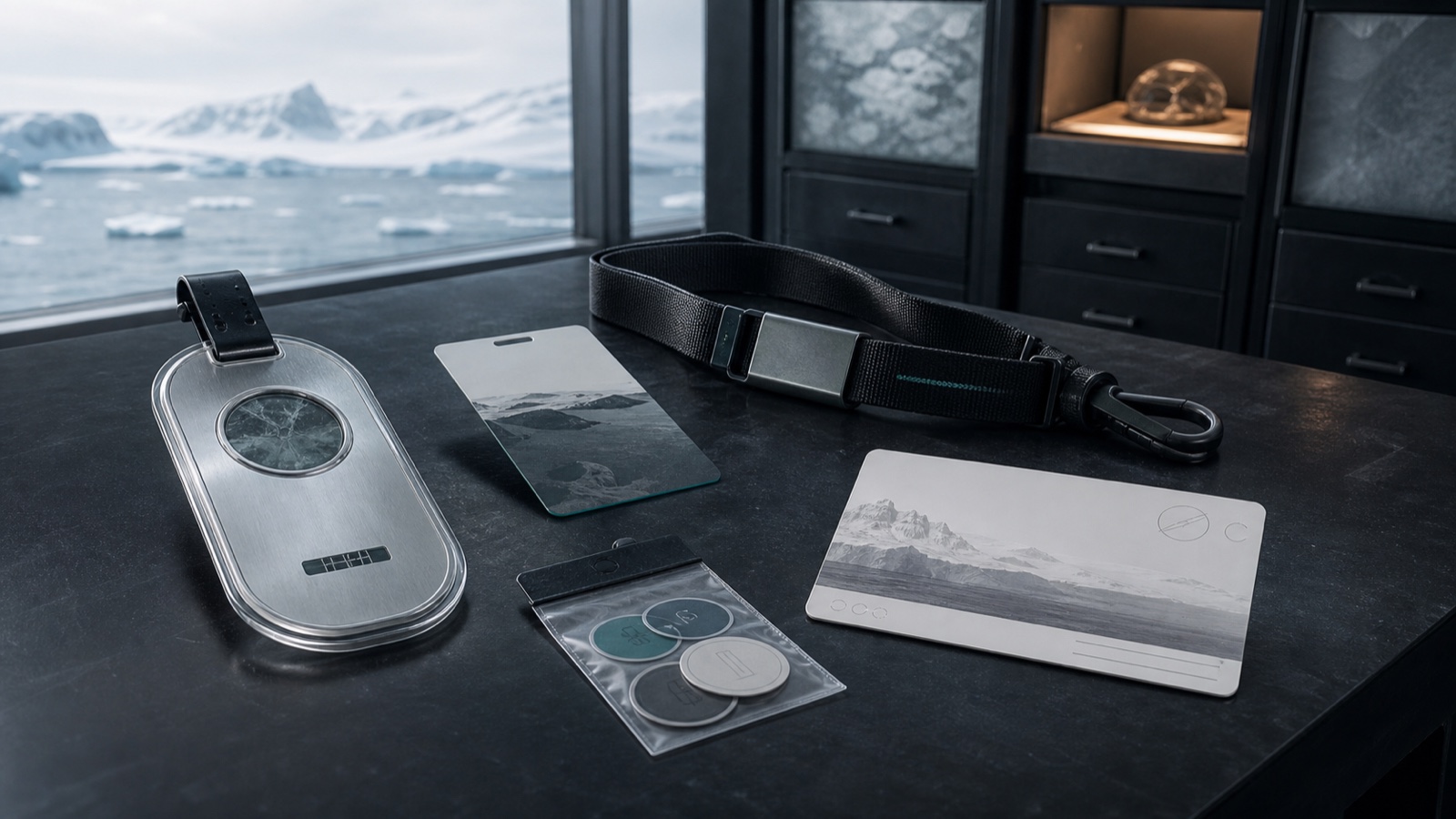
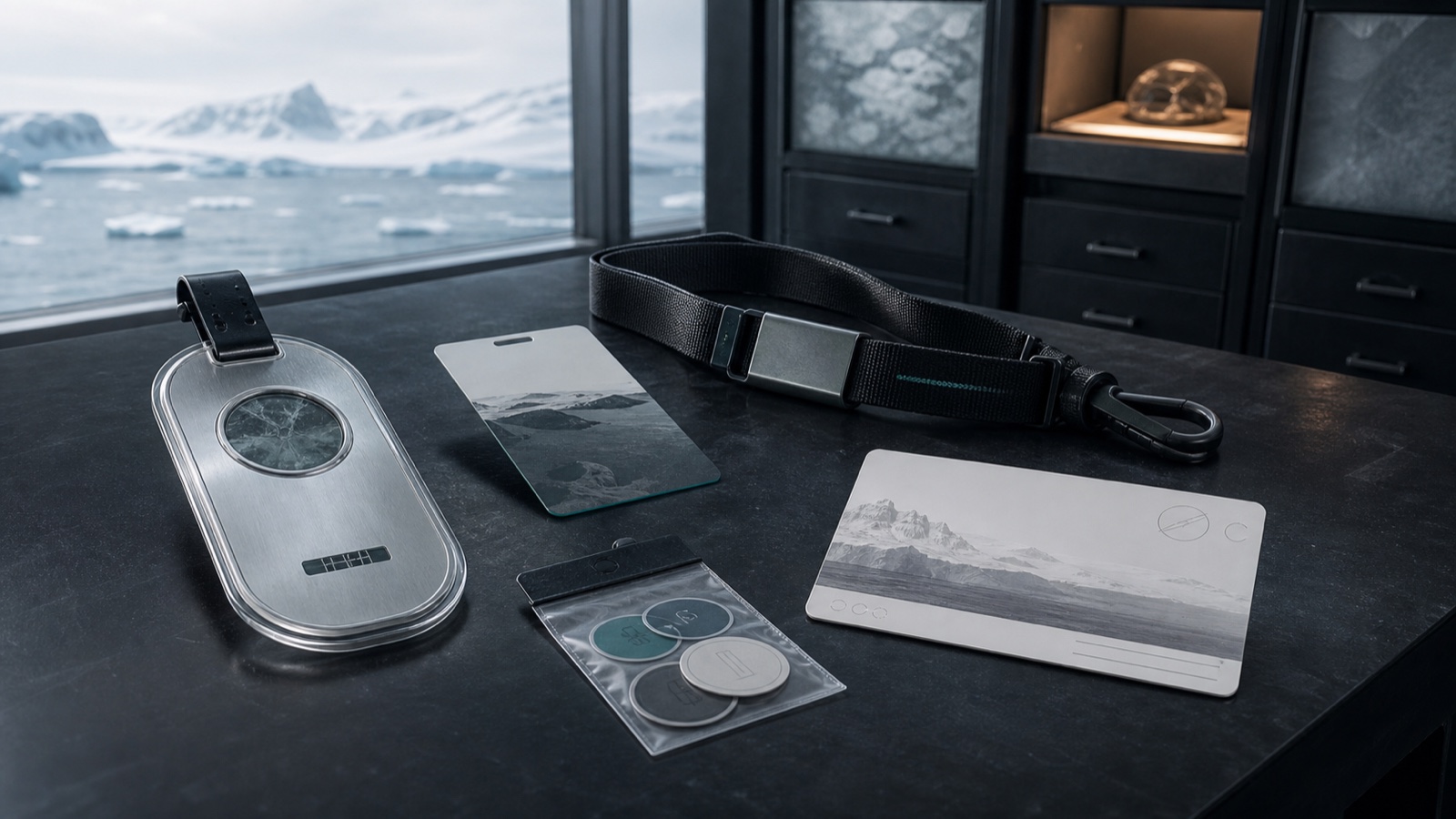
A Zero Access set can include five simple objects:
- an observer badge;
- a visitor pass to a Habitat;
- a Zero Access lanyard;
- an Archive of Traces sticker pack;
- the first public Archive of Traces card.
Together, they form a material grammar. The badge says: observer. The pass says: route not yet assigned. The lanyard says: the world has its own protocols. The sticker pack says: every fragment must be marked. The archive card says: a trace is not a fact until its status is named.
This is the important rule: every public object in SAR should carry a reality status.
Fact means verified public information. Archive means a stored or referenced record. Concept means a designed object or narrative layer. Speculative means a possible future direction. Requires verification means the object, source, claim, right or route must not be treated as confirmed yet.
That status system protects the project from the weakest form of alternate reality work: confusion. SAR can be atmospheric, cinematic and strange, but it should not ask the public to mistake fiction for evidence, or concept design for a completed infrastructure claim. The archive becomes stronger when it names its uncertainty.
The Artifact Office therefore has two jobs at once.
First, it gives SAR a physical interface. A person does not only read about cold habitats, polar archives or the Syndicate. They can encounter a card, a patch, a badge or a marked object that behaves like a fragment of the world.
Second, it creates a disciplined public record. Every object can receive an ID, a series, a laboratory connection, a habitat connection, a digital passport, a legal note and a publication status. A badge becomes more than a souvenir because it can be indexed. A visitor pass becomes more than a prop because it can point to a route. A card becomes more than an image because it states what is known, what is imagined and what still requires verification.
This is why Zero Access is a useful beginning. It does not overpromise. It does not announce a facility, a partnership or a hidden operation. It simply opens the public layer of the world and gives it a first set of objects.
Object leads to access.
Access leads to story.
Story leads to a digital passport.
The passport leads to a community that can read the status before it reads the myth.
That is how a future archive becomes public without becoming false.
Status note. This publication marks the material as concept / public interface / future archive object. It does not claim a real credential, legal membership, access to a physical facility, or verified infrastructure.
Mirrors
Image archive: GitHub raw asset.