Object -> Access -> Story -> Digital Passport -> Community
A short public note about the SAR Artifactorium as a concept layer: a way to turn badges, guest passes, lanyards, stickers, and archive cards into carefully marked physical interfaces for a speculative research-media world.
The SAR Artifactorium begins with a simple question: what happens when a future world is not introduced by a manifesto, but by an object?
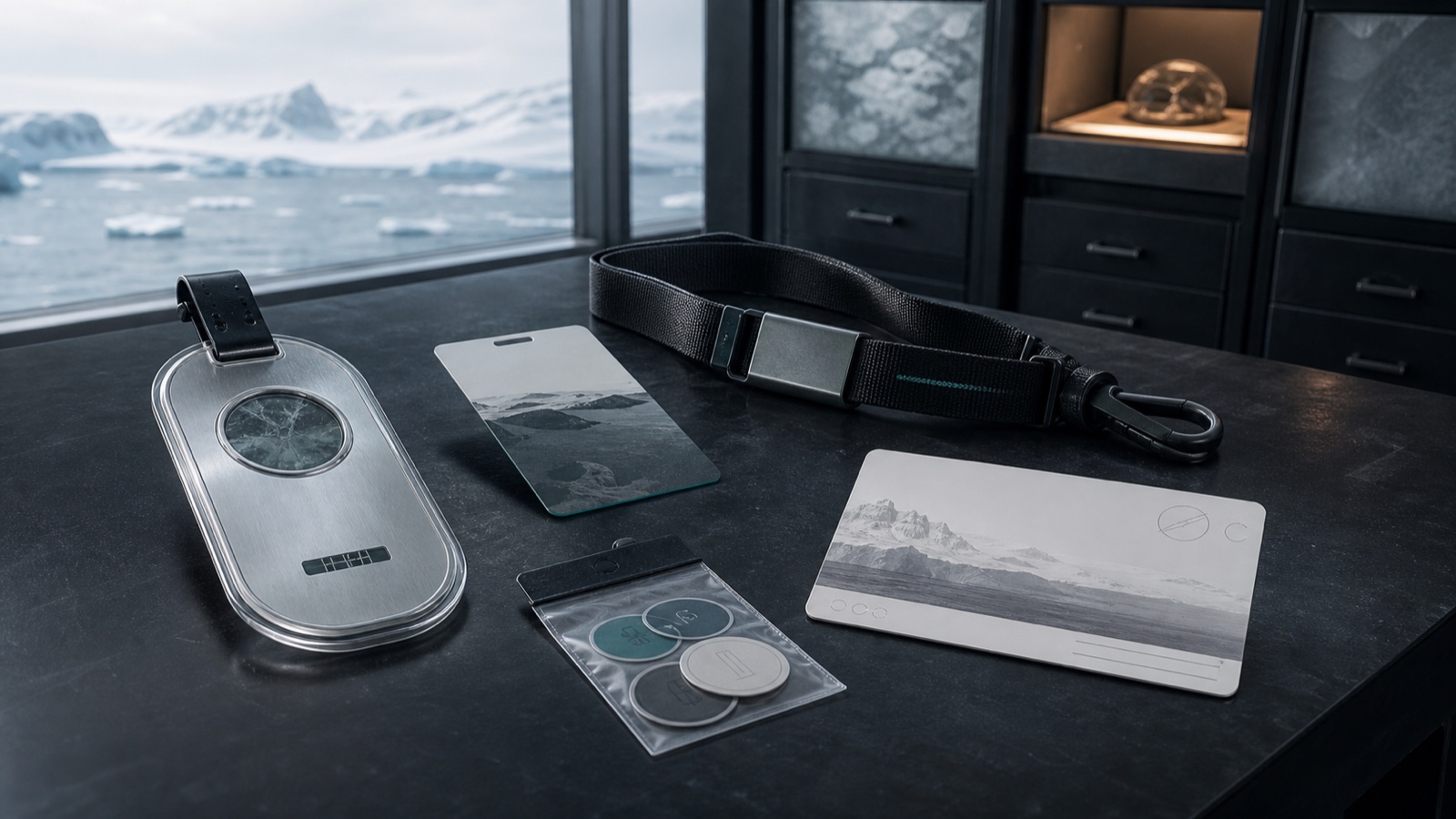
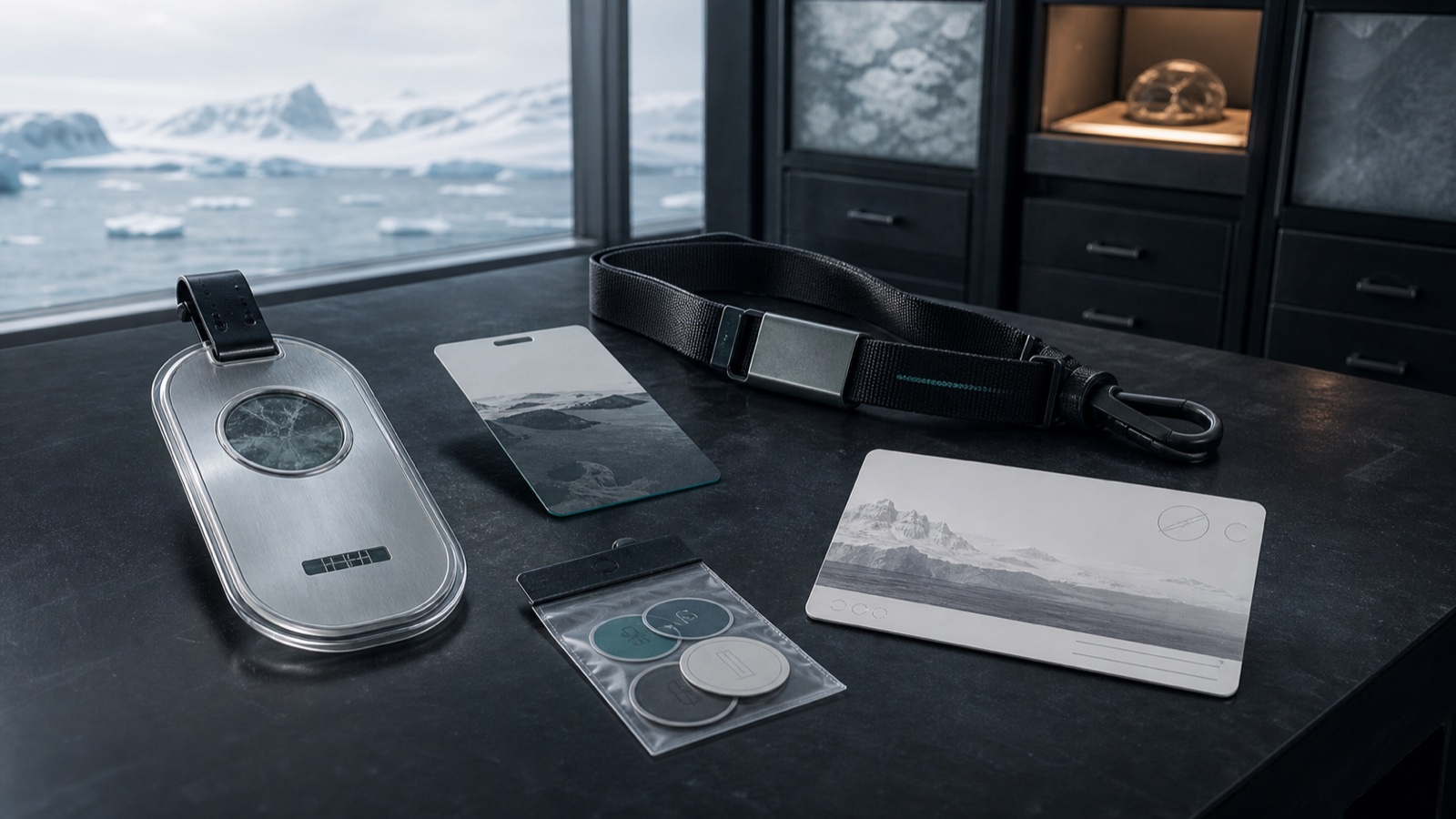
An object is modest. It does not need to announce a finished institution. It can sit on a table: an observer badge, a guest pass, a lanyard, a sticker sheet, an archive card. Each item can carry a small part of the world without claiming more authority than it has.
This is the purpose of the Artifactorium inside SAR. It is not a conventional merchandise store. It is a bureau of material traces: a place where fictional access, public memory, speculative design, and archive discipline meet in physical form.
The first working matrix is:
Object -> Access -> Story -> Digital Passport -> Community.
The object gives the reader something visible. Access defines the role: guest, observer, archive curator, laboratory operator, or another carefully marked layer. The story explains why the item exists inside the world. The digital passport gives it a public address. Community begins only after the object has a status that can be read without confusion.
This is why the first SAR series is called Zero Access. Zero Access does not grant operational authority. It does not represent membership in a legal organization. It is a concept layer and a public entry route. Its first objects can be read as prototypes: an observer badge, a guest pass to a Habitat, a Zero Access lanyard, an Archive of Traces sticker pack, and Archive Card 001.
The discipline matters. A badge can easily look more official than it is. A pass can accidentally imply a real facility. A digital twin can sound like a token promise before the legal structure exists. SAR should avoid that mistake. Every object needs a reality status: concept, archive, speculative design, or requires verification.
The Artifactorium is useful because it makes the world tangible while keeping its claims limited. It can support exhibitions, public notes, archive cards, future catalogs, and small collectible releases. But each release must say what it is and what it is not.
At this stage, the SAR Artifactorium is a concept and editorial protocol for physical-world storytelling. It is not a claim of an operating facility, official credential system, state relationship, investment product, or active membership program.
A future archive becomes stronger when its objects are honest. The first badge does not open a door. It opens a language.
Status marking
CONCEPT / SPECULATIVE DESIGN / PHYSICAL INTERFACE PROTOCOL / REQUIRES VERIFICATION BEFORE COMMERCIAL RELEASE.
No real facility access, legal membership, state affiliation, investment product, operational credential, or deployed digital passport is implied by this note.
Public mirrors
- Telegra.ph: https://telegra.ph/SAR-Artifactorium-Objects-That-Turn-Access-Into-a-Story-05-31
- GitHub Gist: https://gist.github.com/tech4oceans/ca8a48429c299e4d2eb3af2658171ed0
- Rentry: https://rentry.co/sar-artifactorium-zero-access-2026-05-31
- WordPress image: https://tech4oceans.ru/wp-content/uploads/2026/05/sar-artifactorium-zero-access-preview-2026-05-31.jpg
- GitHub raw image: https://raw.githubusercontent.com/tech4oceans/fund-ocean/main/publications/sar/2026-05-31/sar-artifactorium-zero-access-preview-2026-05-31.jpg
Tags: SAR, ARTIFACTORIUM, ZERO ACCESS, OBJECTS, PHYSICAL INTERFACE, ARCHIVE OF TRACES, SPECULATIVE DESIGN, PUBLIC NOTE, DIGITAL PASSPORT, FUTURE ARCHIVE`.